In this article
Data centers depend on reliable cooling systems to maintain the operating temperatures required by servers, networking equipment and other IT infrastructure. However, installing powerful cooling equipment alone does not guarantee effective temperature management. Poor airflow distribution, hot and cold air mixing, and uneven cooling can affect overall data center performance.
This is where Data Center Containment becomes important. By separating hot and cold airflow within the server environment, containment systems help improve airflow management, support better cooling efficiency and reduce the risk of temperature-related issues.
Let’s understand how data center containment works and why it is an important consideration for modern data center infrastructure.
1. Understanding Airflow Challenges in Data Centers
Servers generate heat while processing workloads. Cooling systems supply cold air to maintain suitable operating temperatures, while hot air released by IT equipment needs to be removed from the server environment.
Ideally, cold air should reach the server air intakes, and hot exhaust air should return to the cooling system without mixing with the incoming cold air.
However, several airflow challenges can affect this process:
-
Hot and cold air mixing: Cold supply air mixes with hot exhaust air, reducing cooling effectiveness.
-
Uneven airflow distribution: Some server racks receive insufficient cooling air.
-
Air recirculation: Hot exhaust air can flow back towards server intakes.
-
Bypass airflow: Cold air may return to the cooling system without passing through IT equipment.
These issues can create unnecessary cooling demands and make temperature management more difficult.
2. What Is Data Center Containment?
Data center containment is an airflow management approach that separates hot and cold air within a server environment. It uses physical barriers, panels, doors and other containment components to control the movement of air around IT racks.
The primary objective is to prevent hot exhaust air from mixing with cold supply air.
There are two commonly used approaches:
Hot Aisle Containment
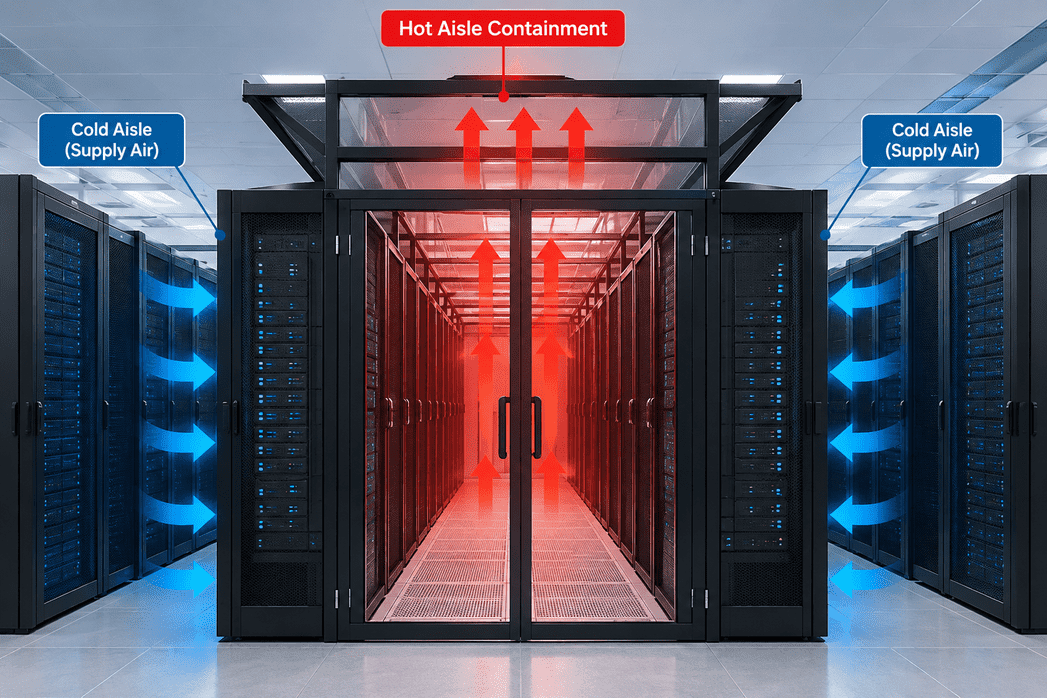
Hot aisle containment encloses the aisle where server racks release heated exhaust air. The containment structure helps direct hot air towards the cooling return path instead of allowing it to spread throughout the data center.
This approach is useful for facilities looking to manage hot exhaust air and improve separation between supply and return airflow.
Cold Aisle Containment
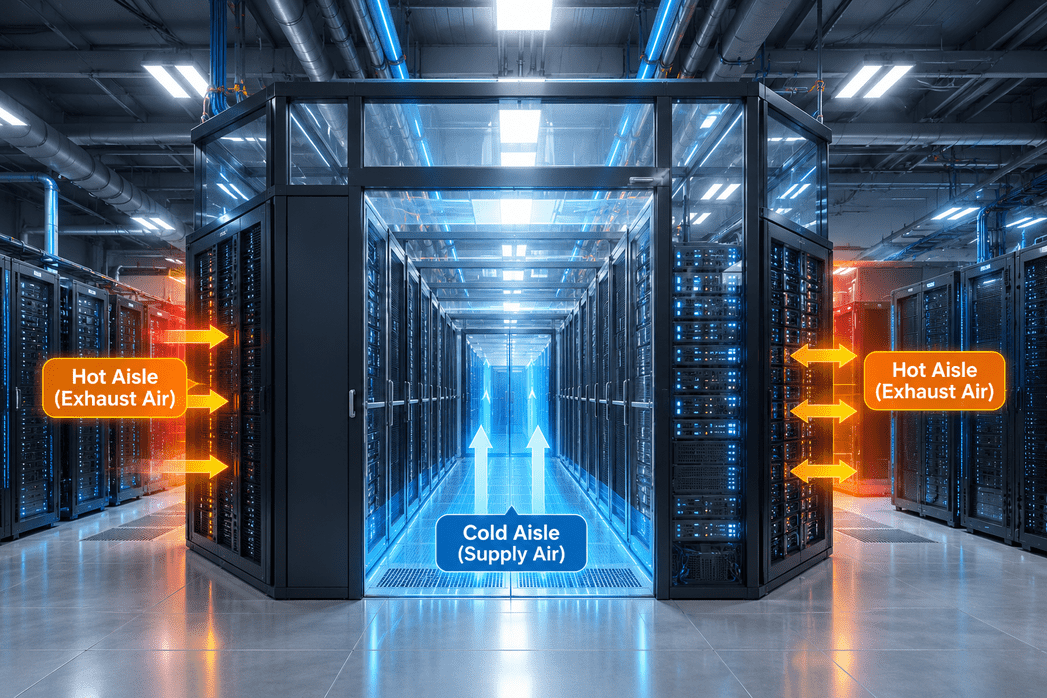
Cold aisle containment encloses the aisle where servers receive cold supply air. Doors, ceiling panels and other barriers help keep cold air within the designated aisle, reducing unwanted mixing with hot exhaust air.
Both approaches improve airflow separation, although the right design depends on the data center layout, cooling architecture and operational requirements.
3. How Data Center Containment Improves Cooling Efficiency
Effective containment can improve the way cooling air moves through a data center. Here are some important benefits.
Prevents Hot and Cold Air Mixing
When hot exhaust air mixes with cold supply air, cooling systems may need to work harder to maintain the required temperature conditions.
Containment creates a physical separation between these airflow paths. This helps deliver cold air to server intakes while directing hot exhaust air towards the cooling return system.
Improves Airflow Distribution
Poor airflow management can result in some racks receiving more cooling air than they need, while others experience insufficient airflow.
Hot aisle and cold aisle containment help establish more controlled airflow paths. This can improve cooling air distribution across server racks when properly designed and implemented.
Helps Reduce Data Center Hot Spots
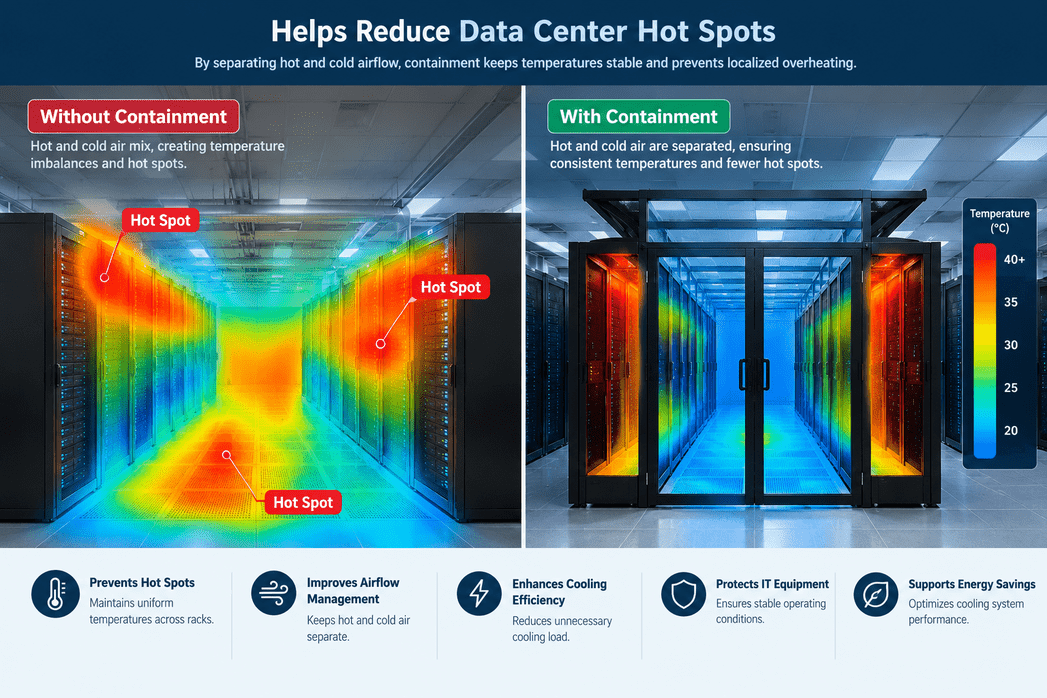
Data center hot spots are areas where temperatures rise beyond the desired operating range. They can develop because of insufficient airflow, hot air recirculation, high equipment density or poorly planned rack layouts.
By controlling hot and cold airflow, containment helps reduce the conditions that contribute to localized temperature problems.
However, hot spots should also be assessed through rack-level temperature monitoring, airflow measurements and cooling system checks.
Supports Better Cooling Energy Management
When airflow is properly controlled, cooling systems may be able to operate more efficiently by reducing unnecessary air mixing and improving the use of available cooling capacity.
Actual energy savings depend on containment design, cooling equipment, IT load, operating temperatures and existing infrastructure.
4. Why Modular Containment Matters for Growing Data Centers
Data centers continuously evolve as businesses add servers, increase computing workloads and expand their IT infrastructure. These changes can create new airflow and cooling requirements.
A modular containment approach provides flexibility when planning or modifying containment arrangements.
Depending on the system design, modular containment can offer:
-
Adaptable configurations for different rack layouts.
-
Options for existing data center environments.
-
Easier planning for infrastructure expansion.
-
Flexible integration with suitable cooling arrangements.
-
Better alignment between containment design and IT requirements.
For businesses planning new deployments or upgrading existing facilities, modular containment can be an important part of long-term airflow management.
5. What Should You Consider Before Choosing a Data Center Containment Solution?
Selecting the right containment solution requires an understanding of your existing data center environment.
Consider these factors before implementation:
-
Data center layout: Evaluate rack arrangement, aisle dimensions and available installation space.
-
Cooling infrastructure: Understand the existing cooling system and how supply and return air are managed.
-
IT equipment density: Review server loads, rack configurations and heat generation.
-
Airflow requirements: Identify hot spots, bypass airflow and areas where hot and cold air may be mixing.
-
Future expansion: Consider whether the containment arrangement can accommodate additional racks or changes in IT infrastructure.
A proper assessment helps ensure that the selected containment design addresses actual cooling challenges.
6. Improve Your Data Center Airflow Management with NPOD
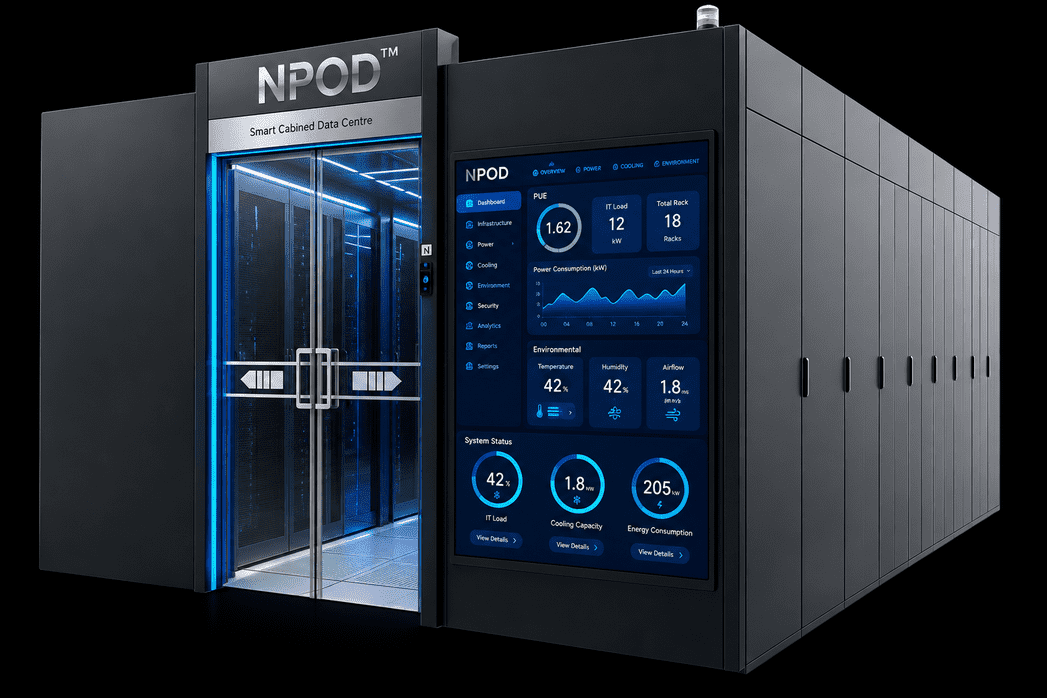
Managing data center cooling requires more than installing cooling equipment. Effective airflow separation is equally important for maintaining a controlled server environment.
NPOD’s Containment Modular solution is designed to support data center airflow management through modular containment configurations. It can help businesses evaluate hot and cold aisle separation according to their rack layout, cooling infrastructure and operational requirements.
Whether you are planning a new data center or looking to improve an existing facility, the right containment approach can support better airflow management and cooling efficiency.
Ready to Optimize Your Data Center Cooling Performance?
Improve airflow management, reduce hot and cold air mixing, and create a more controlled cooling environment with NPOD Containment Modular. Our modular containment solution helps businesses manage airflow around server racks according to their data center layout and cooling requirements.
Explore the NPOD Containment Modular Solution and connect with our team to discuss the right configuration for your facility.