When IT Stops, Business Stops
Most organizations don’t think about infrastructure until something breaks.
Then suddenly:
- Your website is unreachable.
- Your team can’t log in to core applications.
- Customers are unable to complete transactions.
- Internal communication slows down.
This situation is typically the result of a data center outage, and it quickly turns into a larger IT disruption.
In a digitally dependent business environment, downtime is no longer a minor inconvenience. It directly affects revenue, productivity, and customer trust. The real challenge isn’t just fixing the outage, it’s preventing the disruption in the first place.
What Is a Data Center Outage?
A data center outage occurs when the systems hosting your applications, storage, or network infrastructure become unavailable.
This can happen for several reasons:
- Electrical instability or complete power loss
- Cooling system malfunction leading to overheating
- Equipment failure, such as server or storage crash
- Network connectivity breakdown
- Cyber incidents
- Operational mistakes during maintenance
Even if the outage lasts only minutes, the operational impact can be significant.
The more centralized your infrastructure is, the higher the risk of widespread disruption when something fails.
How a Data Center Outage Becomes IT Disruption
An outage becomes a true IT disruption when it affects business operations, not just hardware.
Here’s how the impact spreads:
Digital Platforms Go Offline
If your website or customer portal stops working, revenue flow is interrupted immediately.
Business Applications Become Inaccessible
Teams lose access to ERP systems, CRMs, accounting tools, and internal dashboards. Work slows down or stops.
Communication Systems Fail
Email servers and collaboration tools may become unavailable, delaying decision-making.
Customer Experience Is Affected
Support teams may struggle to access client information or service platforms, leading to dissatisfaction.
This chain reaction shows why infrastructure availability is directly tied to operational stability.
What Typically Causes Outages?
Outages often result from preventable weaknesses in infrastructure design.
Power Instability
Without proper backup and redundancy, even brief power fluctuations can shut down systems.
Cooling Failure
IT equipment generates heat continuously. If cooling systems fail, automatic shutdowns may occur to prevent damage.
Network Vulnerabilities
Single network connections create a point of failure that can isolate entire systems.
Fire and Environmental Risks
Electrical faults or overheating can trigger safety shutdowns.
Lack of Redundant Systems
When there’s no backup for critical components, a single issue can bring down everything.
Organizations that depend entirely on centralized facilities face greater exposure if resilience planning is limited.
The Real Business Impact of IT Disruption
From a business standpoint, downtime has measurable consequences.
Financial Loss
For online businesses or service providers, downtime directly affects transactions and billable operations.
Operational Slowdown
When systems are unavailable, employees cannot complete tasks efficiently.
Brand Reputation Risk
Customers expect reliable services. Repeated interruptions reduce confidence.
Regulatory Exposure
Industries with strict compliance requirements may face penalties if system availability standards are not met.
IT resilience is no longer just a technical goal it’s a strategic necessity.
How Micro Data Centers (Npod) Reduce the Risk
One practical way to minimize disruption is by decentralizing critical infrastructure.
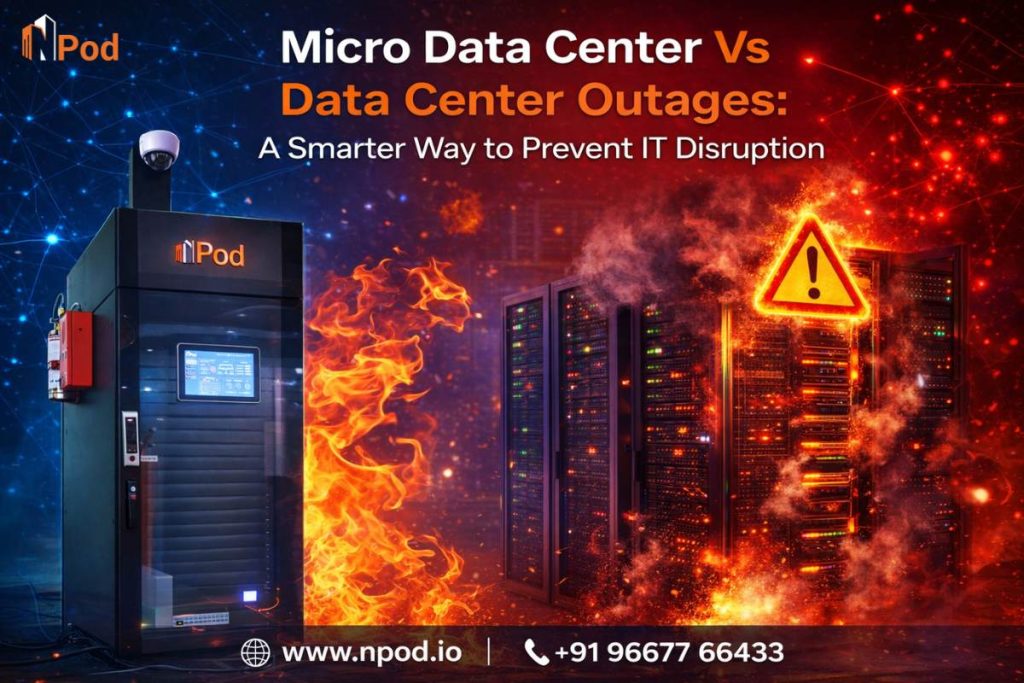
A micro data center is a compact, self-contained unit that houses servers along with integrated power, cooling, and monitoring systems.
Instead of depending entirely on a large central facility, businesses can deploy localized infrastructure that supports essential workloads.
A typical micro data center includes:
- Built-in UPS backup power
- Dedicated cooling systems
- Environmental monitoring
- Fire safety mechanisms
- Secure enclosure design
By reducing single points of failure, organizations can maintain operations even when larger systems encounter issues.
This approach is especially useful for branch offices, manufacturing facilities, retail chains, and distributed enterprises everywhere a micro data center fits well.
The Role of Edge Infrastructure in Modern IT
As businesses expand across multiple locations, relying solely on a central data center becomes risky.
An edge data center or micro data center strategy places infrastructure closer to where data is generated and used.
Benefits include:
- Reduced latency
- Faster application performance
- Improved uptime at remote sites
- Better local control of critical systems
This distributed model improves resilience and reduces dependence on one central environment.
Strengthening Business Continuity with Npod
Building resilient infrastructure doesn’t always require constructing a full-scale data center.
The npod micro data center solution is designed to provide an integrated, modular alternative.
It combines:
- Power protection
- Cooling management
- Fire safety
- Compact deployment design
- On-prem installation capability
- Scalability for growing workloads
This allows organizations to quickly implement localized IT environments that support continuity planning.
Instead of reacting to downtime events, businesses can proactively reduce risk exposure through structured infrastructure deployment.
Npod is particularly suited for companies seeking to strengthen their business continuity solution without overcomplicating operations.
Why Business Continuity Requires Infrastructure Planning
Backup plans alone are not enough.
True business continuity depends on:
- Redundant systems
- Local failover capabilities
- Continuous monitoring
- Controlled environments
- Scalable infrastructure
Micro data centers help bridge the gap between traditional centralized facilities and modern distributed IT needs.
They offer a balanced approach: compact, efficient, and resilient.
As digital dependency increases, infrastructure reliability becomes a competitive advantage.
Conclusion
A data center outage clearly demonstrates how vulnerable businesses can be when infrastructure fails.
The consequences are immediate:
- Operations pause.
- Revenue declines.
- Customer trust weakens.
However, disruption is not inevitable.
By adopting distributed infrastructure strategies such as micro data centers, organizations can reduce downtime risks and improve resilience.
Solutions like Npod provide a practical path toward building stronger, more reliable IT environments, ensuring that critical operations continue even during unexpected events.
In modern business, prevention is far more valuable than recovery.
Modern workloads like AI training, machine learning, and high-performance computing often rely on GPU cloud servers for scalable processing power. By deploying an Npod micro data center at the edge, businesses can optimize local infrastructure while securely connecting to GPU cloud environments for heavy workloads. This hybrid approach improves performance, reduces latency, and ensures operational continuity even during infrastructure disruptions.
Frequently Asked Questions
1. What is the most common cause of data center outages?
Power instability and lack of infrastructure redundancy are among the leading causes.
2. Can a micro data center eliminate downtime completely?
No system guarantees zero downtime, but micro data centers significantly reduce risk through integrated protection systems.
3. Are micro data centers suitable for mid-sized businesses?
Yes. They are scalable and adaptable to various operational sizes and industries.
4. How is an edge data center different from a traditional one?
Edge facilities are deployed closer to operational sites, while traditional data centers are centralized and often geographically distant.
5. Why is infrastructure planning part of business continuity?
Because operational stability depends on system availability. Infrastructure resilience ensures continuity during disruptions.