Your server room is filling up, and it costs you too much to cool? You need reliable computing resources for the opening of a new branch, manufacturing site, or edge location without building a traditional server room?
These are just some examples of problems faced by enterprises in the digital era. Although traditional server rooms are widely used for enterprise computing for years, before they are prepared to serve enterprise applications, businesses are required to invest significantly in construction, cooling, power, and maintenance.
While traditional server rooms can fulfill their duty for years, they are getting outdated with time. The reason is that modern businesses require more flexible solutions to build the IT infrastructure. Thus, modular data centers have been chosen as a better server room alternative.
Why Traditional Server Rooms Are Becoming Less Practical
Creating a traditional server room requires more efforts than just putting racks in place. All systems from power distribution to cooling, security, and fire protection need to be properly organized to ensure smooth operation.
In case the requirements of a business become higher, it faces a number of difficulties, including
- High deployment and construction costs
- Deployment delays
- Necessity to install more cooling and power capacity
- Insufficient space for expansion
- Maintenance and operational expenses
- Certain complications when implementing solutions for several locations
All these difficulties become especially apparent for companies with branch offices, retail stores, industrial facilities, or edge infrastructure.
What Should You Look for in a Modern IT Infrastructure Solution?
When an organization starts developing its IT environment, it requires certain infrastructure that is easy to implement, maintain, and scale up. Instead of deploying a specially designed server room for each facility, businesses are searching for an IT infrastructure solution which would simplify deployment and ensure high availability.
A good IT infrastructure solution should have:
- Power protection features
- Cooling to ensure high performance of the devices
- Environmental monitoring
- Physic security
- Fire protection
- Scalability
Most importantly, a modular data center should reduce the complexity of deployment while not sacrificing uptime or performance.
Why a Modular Data Center Is a Better Server Room Alternative
A modular data center is an IT infrastructure solution which combines all the necessary components to host server, storage, and networking equipment within one enclosure.
Instead of developing individual solutions for power, cooling, monitoring, and security, businesses will get a pre-engineered solution ready for deployment. This helps shorten the deployment time and ensures efficient functioning of the infrastructure. In comparison to a traditional server room, a modular data center gives more flexibility in terms of less space required, faster deployment, and easier expansion as the business evolves.
Essential Features of a Modern Micro Data Center
A micro data center combines different infrastructure components into a single and integrated solution in order to support business-critical IT operations.
- Integrated Power Protection
Power outages may cause downtime and even data loss. Built-in UPS systems ensure uninterrupted power supply of critical equipment during power outages.
- Precision Cooling
Controlling temperatures plays a significant role in ensuring stable performance of hardware components. Precision cooling systems are responsible for regulating environmental factors, thus contributing to increased energy efficiency and preventing possible overheating problems.
- Intelligent Monitoring
In real-time, these solutions allow seeing what is happening in terms of temperature, humidity, power consumption, and equipment status. This way, IT specialists are able to notice possible problems in advance and take necessary measures to prevent negative effects on business activities.
- Physical Security
Integration of access control helps protect IT assets from any unauthorized attempts to access them, thus removing the need for additional security systems.
- Fire Protection
Additional fire detection and suppression systems are yet another factor that contributes to safety of equipment and minimizes disruptions of business processes.
Therefore, all of these features make up the infrastructure environment that ensures reliable operation of businesses.
Benefits of Choosing a Modular Data Center
Aside from integrating technology, there are significant business benefits that one can get from a modular data center. Some of these are:
- Faster deployment than creating a traditional server room
- Infrastructure simplicity
- System reliability and availability
- Lower operation and maintenance costs
- Scalability to adjust to changing business needs
- Same infrastructure at multiple locations
With a modular data center, businesses would have less time to worry about facilities and more to innovate.
Where a Micro Data Center Delivers the Most Value
The micro data center is best in use when the available space is small or when rapid deployment is required.
It may be applied in such places as the following:
- Hospitals where sensitive data is stored
- Plants engaged in manufacturing process
- Banking and financial branches
- Retail outlets requiring local IT infrastructure
- Education institutions
- Network edge and telecom locations
- Locations of AI and edge infrastructure deployment
- Remote and branch offices
As a compact data center, it enables organizations to deploy enterprise-grade IT infrastructure wherever it is needed.
How NPOD Helps Simplify Modern IT Infrastructure
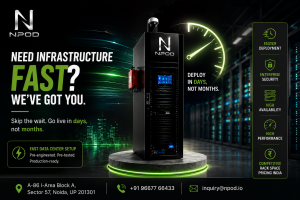
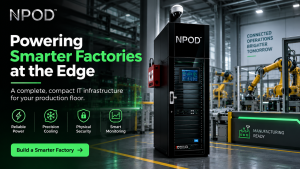
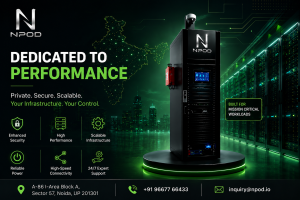
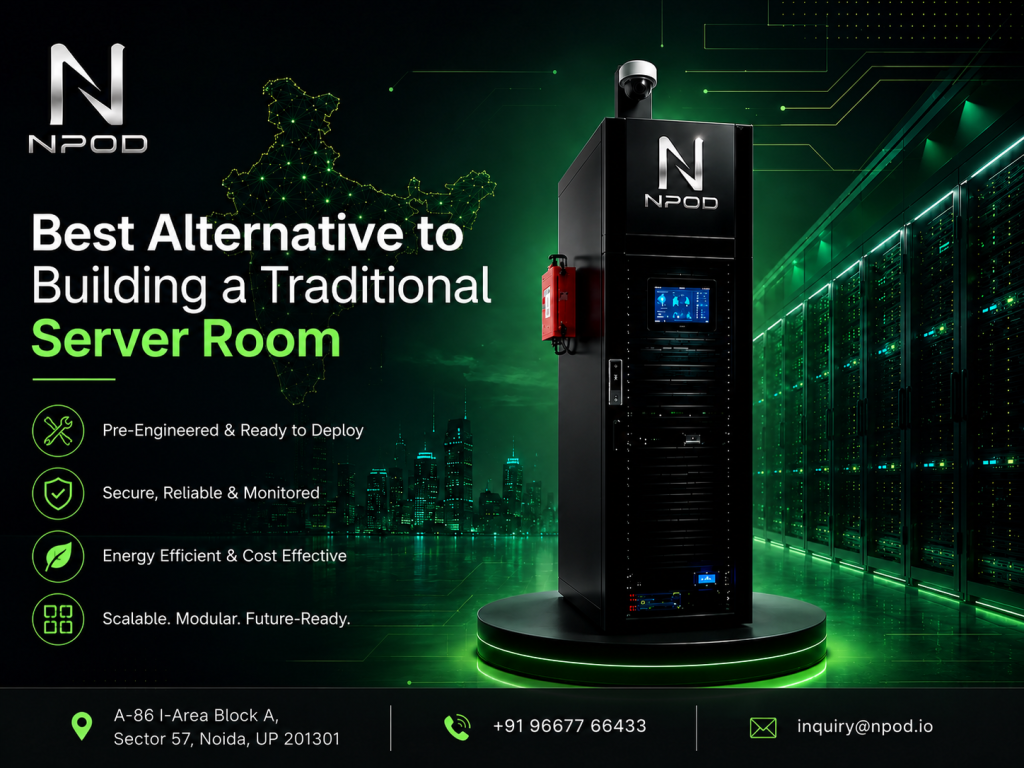
NPOD Micro Data Center has been developed with the view to overcoming the difficulties involved in building a traditional server room. All essential features including power protection, precision cooling, intelligent monitoring, physical security, and fire protection, have been combined in one easily deployable unit.
Combining such critical infrastructure components in a single enclosure helps simplify the deployment process, cut down infrastructure complexity, and ensure reliable operation of enterprises’ offices, hospitals, factories, retail branches, and edge infrastructure. Therefore, it becomes possible to provide businesses with a good solution of modernizing their IT infrastructure without having to construct separate server rooms.
Conclusion
With the increasing scope of businesses’ digital infrastructure, traditional server room construction is not the only available option anymore. A modular data center allows implementing a faster, scalable, and less complicated strategy involving integration of such infrastructure components as power, cooling, monitoring, physical security, and fire protection.
Thus, businesses interested in obtaining a reliable server room replacement should consider the use of NPOD Micro Data Center, which will be helpful in modernizing IT infrastructure deployment.