Every second of delay can affect production, customer experience, or business operations. As organizations generate more data across factories, branch offices, hospitals, and retail locations, relying solely on centralized data centers becomes increasingly difficult. This is why businesses are investing in an Edge Data Center Solution that delivers computing power closer to where it is needed.
Selecting the right solution goes beyond comparing hardware specifications. The real value lies in choosing infrastructure that is reliable, scalable, and ready to support future business growth.
Why the Right Edge Solution Makes a Business Difference
Edge infrastructure supports far more than local computing. It keeps production systems running, enables real-time analytics, supports AI applications, and improves customer experiences across distributed locations.
Selecting an unsuitable platform can create long-term challenges, including:
- Higher deployment and maintenance costs
- Limited room for future expansion
- Increased downtime risks
- Complex infrastructure management
The best solution should simplify operations while providing the flexibility to grow with changing business demands.
Imagine opening a new manufacturing facility where production equipment is ready, but the IT infrastructure is still weeks away from completion. Every delay affects productivity, project schedules, and business operations. A factory-built edge solution allows organizations to deploy computing infrastructure much faster, helping new facilities become operational without waiting for lengthy construction and integration projects.
- Integrated Infrastructure That Simplifies Deployment
One of the biggest challenges in traditional IT projects is coordinating multiple infrastructure components from different vendors. Power systems, cooling, racks, monitoring, and security often require separate planning, installation, and maintenance.
A Modular Edge Data Center eliminates this complexity by integrating these critical components into one factory-built platform. Instead of managing multiple installation phases, organizations receive a solution designed to work together from day one.
This approach helps businesses:
- Reduce deployment complexity
- Accelerate installation
- Improve infrastructure reliability
- Standardize deployments across locations
The result is a faster path from planning to production.
- Flexible Edge Data Center Architecture That Grows with Your Business
Business growth is rarely predictable. New branches, expanding operations, AI initiatives, and increasing data volumes all create additional infrastructure requirements.
An adaptable Edge Data Center Architecture allows organizations to expand capacity without redesigning or replacing existing infrastructure. Rather than investing in oversized facilities from the beginning, businesses can scale as demand increases.
Scalable architecture provides the flexibility to:
- Increase computing capacity
- Add more rack space
- Support higher power densities
- Expand to additional sites with consistent infrastructure
This ensures IT infrastructure continues supporting business growth instead of becoming a limitation.
- Why Reliable Power and Cooling Should Never Be an Afterthought
Even the most advanced servers cannot deliver reliable performance without stable power and proper environmental control. Power interruptions or overheating can affect application availability, reduce equipment lifespan, and increase operational costs.
A dependable edge platform should include intelligent cooling, UPS systems, environmental sensors, and efficient power distribution that work together to maintain stable operating conditions.
These integrated systems help organizations minimize downtime while improving infrastructure efficiency. Many organizations focus on server performance during procurement, but long-term operating costs are often influenced more by power efficiency, cooling design, and infrastructure management than by hardware specifications alone.
- Built for Modern Edge Computing Infrastructure
Today’s organizations process enormous amounts of data through AI, IoT devices, industrial automation, video surveillance, and real-time business applications. These workloads require dependable Edge Computing Infrastructure capable of delivering fast and reliable performance close to the point of data generation.
Instead of transferring every workload to a centralized facility, edge infrastructure enables faster processing, lower latency, and greater operational resilience.
Whether supporting manufacturing systems, financial applications, healthcare platforms, or smart retail environments, a modern edge solution should be ready for evolving technologies without requiring significant infrastructure changes.
- Faster Deployment Through Modular Design
Traditional server room construction often involves lengthy procurement, site preparation, multiple contractors, and complex infrastructure integration. These projects can delay business expansion by several months.
A Modular Edge Data Center significantly reduces deployment timelines because infrastructure is designed, assembled, and tested before arriving on-site.
Businesses benefit from:
- Faster project completion
- Reduced on-site construction
- Predictable deployment schedules
- Quicker availability of IT resources
This allows organizations to support new facilities and business initiatives without waiting for traditional infrastructure projects.
- Managing Multiple Edge Sites Without Increasing IT Workload
As organizations expand, managing dozens of remote IT sites becomes increasingly challenging. Sending engineers to every location whenever an alert occurs is both expensive and inefficient.
A modern Enterprise Edge Data Center should provide centralized monitoring that allows IT teams to oversee infrastructure across multiple locations from a single interface.
Key capabilities include:
- Real-time infrastructure monitoring
- Environmental and power alerts
- Energy consumption reporting
- Access control monitoring
With greater visibility into infrastructure health, IT teams can resolve issues more quickly while reducing operational costs.
- Physical Security That Supports Business Continuity
Many edge deployments operate in factories, warehouses, telecom sites, retail outlets, or remote offices where dedicated IT personnel may not always be present.
Protecting critical infrastructure requires more than locking a server cabinet. Comprehensive physical security should include smart access control, surveillance, fire detection, environmental monitoring, and automated alerting.
These capabilities reduce operational risks while helping organizations maintain continuous service availability.
- Efficient Edge Data Center Architecture That Reduces Long-Term Costs
The value of infrastructure should extend well beyond the initial deployment.
An optimized Edge Data Center Architecture improves operational efficiency by reducing energy consumption, simplifying maintenance, and minimizing unplanned downtime. These improvements lower the total cost of ownership while extending the life of critical IT equipment.
For organizations operating multiple locations, these long-term savings can become just as valuable as the initial deployment speed.
- Enterprise-Ready Infrastructure for Multi-Site Expansion
As businesses continue expanding, consistency becomes increasingly important. Deploying different infrastructure designs at every location creates unnecessary complexity for IT teams.
A standardized Enterprise Edge Data Center enables organizations to replicate the same reliable infrastructure across factories, branch offices, healthcare facilities, educational campuses, retail stores, and regional locations.
This consistency simplifies management, improves operational efficiency, and supports future digital transformation initiatives.
Why Organizations Choose NPod Edge Data Center Solution
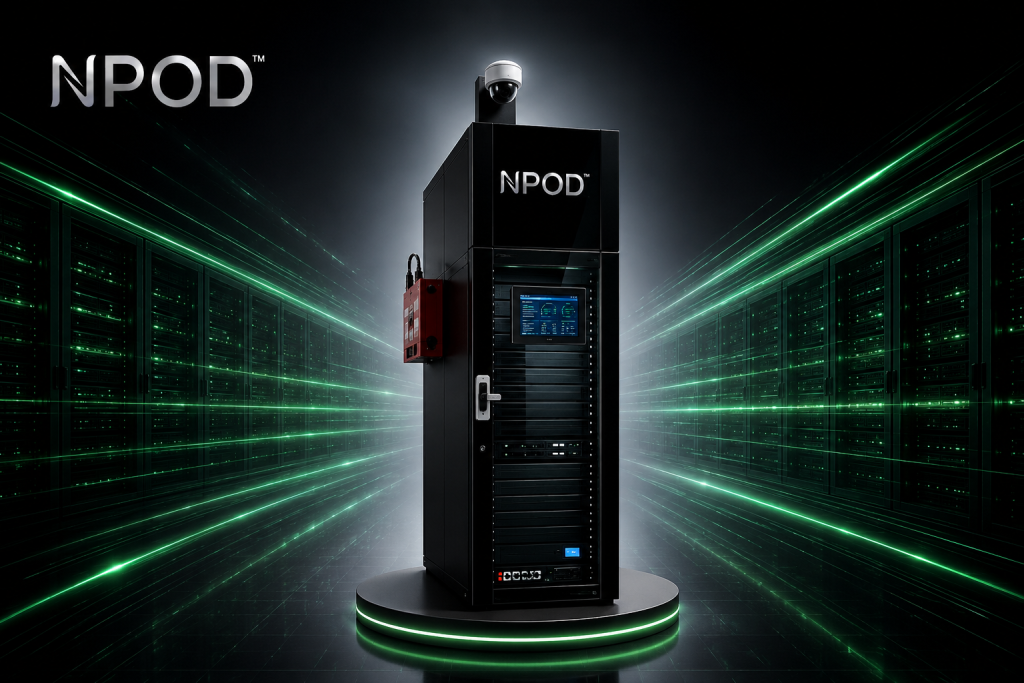
Instead of coordinating multiple vendors for power, cooling, racks, monitoring, and security, organizations can deploy NPod as a single integrated platform. This simplifies deployment, shortens project timelines, and creates a standardized infrastructure that is easier to manage across multiple locations.
Built to support modern Edge Computing Infrastructure, it enables organizations to standardize edge deployments across multiple locations while maintaining operational efficiency. Whether supporting AI workloads, industrial automation, retail, healthcare, or enterprise applications, NPod provides a reliable foundation that scales with evolving business requirements.
Conclusion
Every edge deployment becomes part of your long-term digital infrastructure. Choosing a solution that is scalable, secure, and easy to manage today helps avoid expensive upgrades tomorrow. Organizations that evaluate infrastructure beyond hardware specifications are better prepared to support AI, IoT, and future business expansion with confidence. By prioritizing scalability, integrated design, intelligent monitoring, security, and energy efficiency, organizations can build a resilient edge environment that delivers long-term business value. Evaluating these essential Edge Data Center Features will help businesses choose an infrastructure platform that remains reliable, efficient, and ready for tomorrow’s digital demands.