In this article
Universities are undergoing rapid digital transformation. From hybrid learning to AI research, institutions need IT environments that deliver performance, reliability, and scalability without straining resources.
Traditional data centers often struggle to keep pace with growing data demands. As a result, many universities are adopting micro data center to support expansion and modernization.
The Growing Demand for Smarter Campus Technology
Today’s students and faculty expect smooth access to digital resources. Whether attending virtual classes, doing research, using cloud apps, or working with folks from other departments, everyone depends on reliable digital resources every day.
At the same time, colleges are making significant investments in smart campus infrastructure. Think smart classrooms, building management systems, digital entry controls, surveillance networks, and IoT devices. All these tools create large volumes of data that has to be handled properly.
Universities increasingly rely on connected surveillance systems, smart energy platforms, and digital learning environments. As these technologies expand, the need for scalable IT infrastructure continues to grow.
Understanding the Role of a Micro Data Center
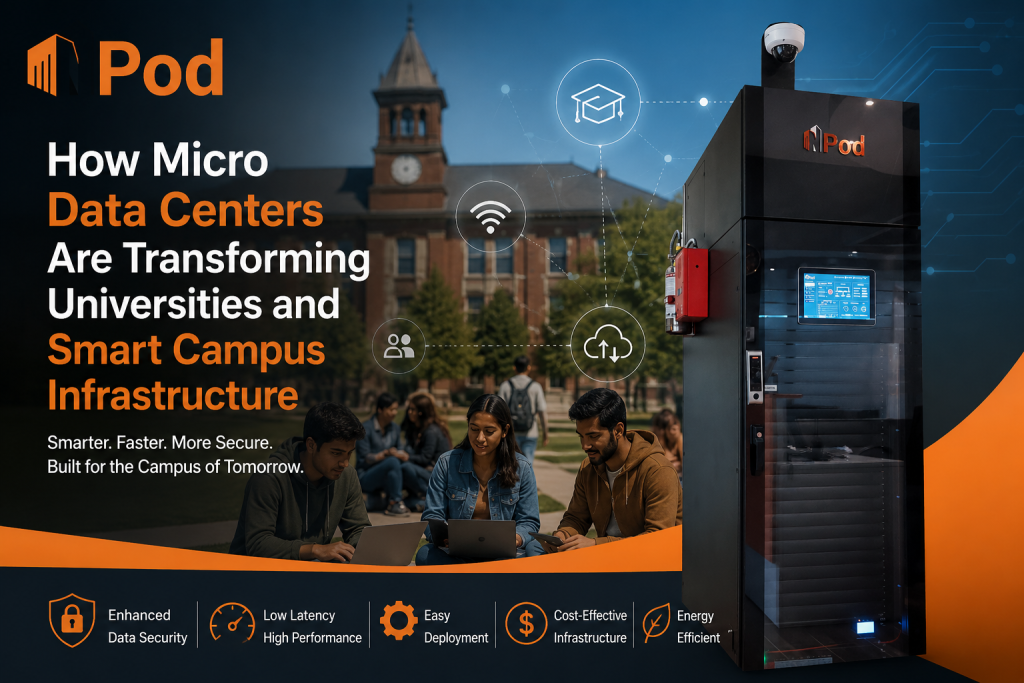
These compact IT solutions combine servers, networking, power, cooling, and security in a single enclosure. Unlike traditional facilities, they can be deployed quickly across campus locations.
This setup enables data processing closer to users and devices, reducing latency and improving system performance. It keeps digital classrooms, research apps, and smart campus tech running smoothly too, easing the load on central servers.
Institutions managing growing data volumes can benefit significantly from this approach. It enables scalable growth without requiring new facilities, making it a cost-effective long-term solution.
Supporting the Modern University Data Center
Many institutions already have centralized university data centers that support critical applications, student information systems, research databases, and administrative services. While these are highly important, they struggle with increasingly complex workloads.
By adding localized computing resources, universities can process workloads closer to where they are needed. This setup improves performance and reduces network congestion too. The existing data center can then focus on the mission-critical operations, making for a more flexible and reliable system overall.
Edge Computing Is Reshaping Education
The key driver behind updating educational infrastructure is edge computing in education. It lets data processing happen near where information is created, not just through central or cloud systems.
Universities benefit significantly from this approach. Their research apps can work faster, smart classrooms can react instantly, and linked devices run smoother.
As more universities adopt this approach, edge computing in education has become a key component of modern digital campus strategies.
Strengthening Educational Institution IT Infrastructure
Universities must support diverse users, applications, and services while maintaining security and operational reliability.
Updating the IT infrastructure in a learning institution is no longer simply a matter of increasing capacity but rather setting up an environment that can adapt to changing demands, foster innovation, and promote business continuity.
Flexible computing solutions assist institutions with scaling out capacity as demand increases, without a reliance on one physical location. Investing in a strong learning educational institution’s IT infrastructure allows universities to improve service delivery and support digital transformation efforts.
Why Modular Data Centers Are Gaining Attention
Scalability is a growing concern for many universities. Student populations change, research programs expand, and new technologies emerge with their own requirements.
A modular data center can help address these challenges. Unlike traditional facilities setups, which usually need huge initial investments, modular ones let institutions grow their capacity as they actually need it.
This way, universities can match infrastructure expansion with real demands and stay in better control of costs. So, more universities are finding the modular data center model increasingly attractive because it offers both flexibility and efficiency.
Rethinking the Campus Data Center Strategy
Universities are shifting from centralized IT environments to distributed computing models across campus locations.
This move boosts resilience and keeps apps running smoothly even when there’s an issue somewhere. Plus, it improves access to digital services for students, staff, and researchers.
Nowadays, a smart campus data center approach mixes centralized control with local processing power, balancing out both speed and growth potential nicely.
Benefits of Micro Data Center Solutions for Universities
As higher education institutions modernize their technology environments, flexible data center solutions are becoming increasingly valuable.
- Improved Performance: Placing data closer to where it’s needed cuts down latency and boosts how fast applications respond, especially for real-time applications and research workloads.
- Faster Deployment: Setting up this infrastructure is significantly faster than expanding or building traditional data centers.
- Enhanced Reliability: Having a distributed setup makes universities less reliant on one specific spot, which helps keep operations running smoothly even if something goes wrong somewhere.
- Stronger Security: These centers have built-in security features like monitoring and environmental controls that protect important data and systems better.
- Scalable and Future Growth: Universities can grow their infrastructure gradually to fit changing needs without massive interruptions.
These advantages make micro data center solutions an attractive option for universities seeking practical ways to support innovation and growth.
Building the Future of Smart Campuses
The future of higher education will be more data-driven. Artificial Intelligence, advanced analytics, immersive learning technologies, and connected devices will keep shaping the student experience and transforming campus operations.
For these innovations to thrive, universities need flexible and efficient infrastructure capable of handling increasing workloads. So, investing in smart campus setups is key for universities to achieve their goals and boost efficiency.
Organizations that adopt modern computing now will be better prepared for the shifting needs of students, faculty, and researchers down the road.
Conclusion
Digital transformation is changing the way universities teach, do research, and run their campuses. With technology use speeding up, Universities need the right infrastructure to handle more tasks without falling short on speed and reliability.
Micro data centers are helping universities meet these needs. By complementing existing infrastructure and supporting advanced applications, these solutions help create smarter and more resilient campuses.
FAQ
1. What is a micro data center?
A micro data center is a compact IT solution that combines servers, networking, power, cooling, and security in a single unit. It helps organizations deploy computing resources quickly, improve performance, and support critical applications without the space and complexity of a traditional data center.
2. Why do universities need a data center?
Universities rely on data centers to support learning platforms, research activities, student services, and administrative operations. A reliable infrastructure ensures secure access to information, supports daily operations, and helps institutions deliver a seamless digital experience.
3. How can universities improve IT infrastructure?
Universities can strengthen their IT infrastructure by adopting scalable technologies, modernizing legacy systems, enhancing cybersecurity measures, and improving resource management. Investing in flexible and efficient solutions also helps institutions support new applications, increase operational efficiency, and prepare for future growth.
4. What is the best data center solution for a campus?
The best solution is one that aligns with an institution’s performance, scalability, and budget requirements. Modern deployments that support future growth, operational efficiency, and reliable service delivery are often preferred by educational organizations.
5. How do smart campuses manage data?
Smart campuses manage data through connected technologies that collect, process, and analyze information from various systems and devices. This approach helps improve decision-making, optimize resource usage, enhance security, and deliver better experiences for students, faculty, and administrative teams.
6. How do micro data centers and cloud storage benefit educational institutions?