In this article
Businesses today depend heavily on digital infrastructure. Whether it’s manufacturing, healthcare, banking, retail, or telecom, IT systems need to run without interruption. At the same time, electricity prices are increasing, and maintaining traditional server rooms has become more expensive than ever.
Many organizations are now looking for ways to reduce operational costs without compromising performance. One solution gaining attention is the solar-powered micro data center.
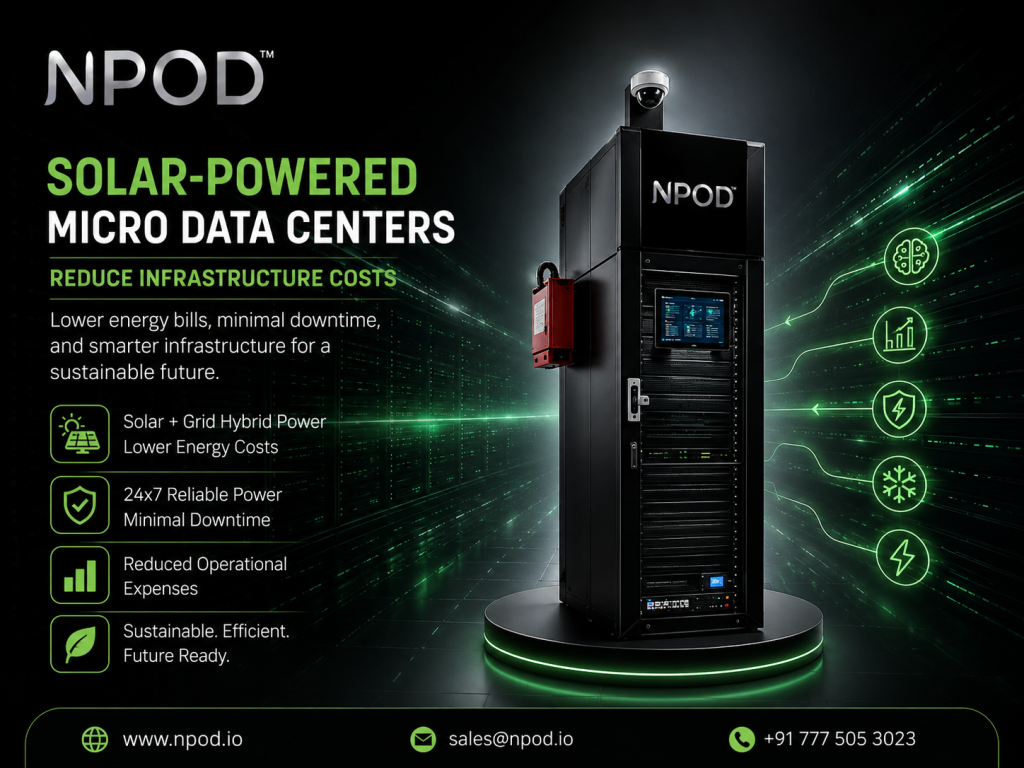
Unlike conventional server rooms that rely only on grid electricity, a solar-powered micro data center uses a combination of solar energy, grid power, and battery backup to keep critical IT systems running. This hybrid approach helps businesses lower energy expenses, reduce maintenance costs, and improve infrastructure reliability.
Let’s look at how this technology helps organizations save money while building a more efficient IT environment.
Understanding a Solar-Powered Micro Data Center
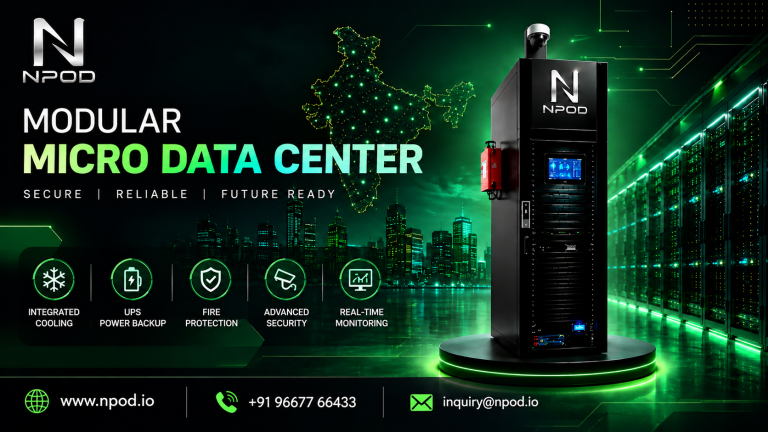
A solar-powered micro data center is a compact, self-contained IT infrastructure designed to support servers, networking equipment, storage, cooling, and power systems within a single enclosure.
Instead of depending on a single power source, it uses solar energy whenever available and automatically switches to grid power or UPS backup when required. This ensures uninterrupted operations without relying entirely on conventional electricity.
Because everything is integrated into one system, deployment is faster and infrastructure management becomes much easier.
Lower Electricity Expenses
Power consumption accounts for a large share of a data center’s operating cost.
When solar panels generate electricity during daylight hours, businesses consume less power from the utility grid. As a result, monthly electricity bills are reduced.
Organizations with multiple offices or remote facilities often see even greater savings because the reduction in energy costs applies across every location.
Over several years, these savings can make a noticeable difference to the overall infrastructure budget.
Less Dependence on Diesel Generators
Many businesses still depend on diesel generators during power failures. While generators provide backup power, they also come with recurring expenses.
These include fuel purchases, routine servicing, oil replacement, and equipment maintenance.
A hybrid micro data center uses solar energy together with UPS batteries to provide backup power, reducing the need to run diesel generators frequently.
Besides lowering operating costs, this also helps reduce noise and emissions.
Lower Cooling Costs
Cooling systems consume a significant amount of electricity in traditional server rooms.
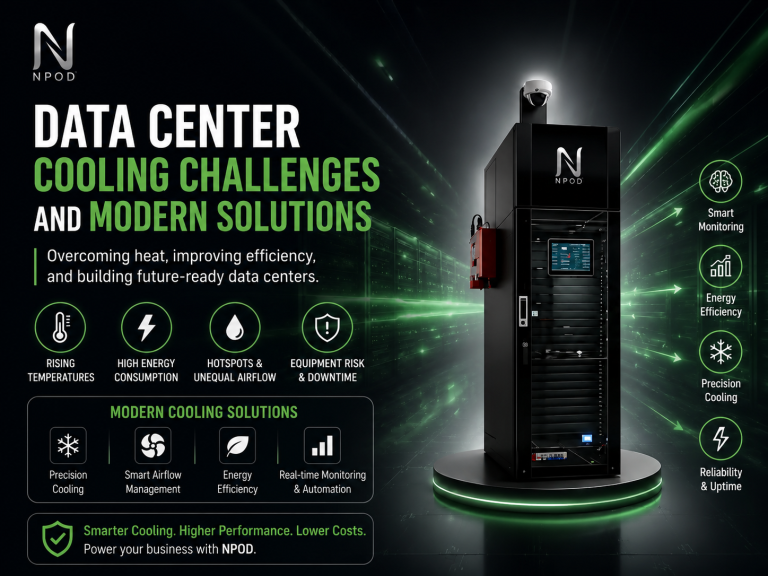
Micro data centers are designed with dedicated cooling systems that deliver conditioned airflow directly where it is needed. Since the cooling environment is controlled inside the enclosure, energy is used more efficiently.
Better cooling also keeps servers operating within the recommended temperature range, helping reduce power consumption and extending equipment life.
No Need to Build a Dedicated Server Room
Setting up a traditional server room requires considerable investment.
Businesses often spend on:
- Civil construction
- Electrical wiring
- Air conditioning
- Fire protection systems
- Security infrastructure
- Power distribution
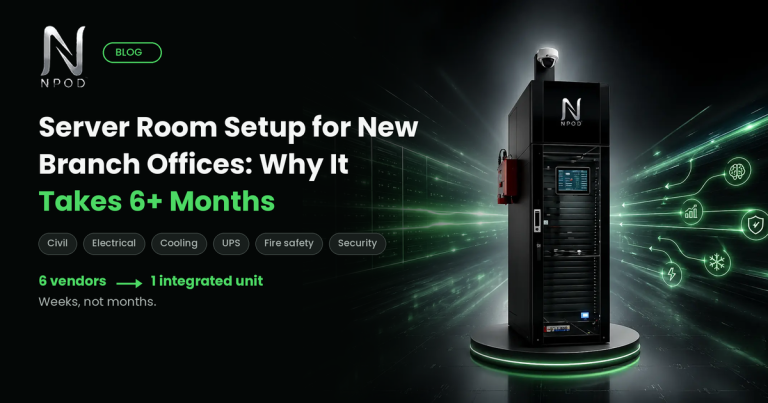
A micro data center combines all these components into a single integrated unit.
This reduces installation costs and allows businesses to deploy IT infrastructure much faster without major construction work.
Reduced Downtime
Unexpected downtime affects productivity and can lead to financial losses.
Power interruptions, cooling failures, or equipment problems may stop business operations, delay production, or interrupt customer services.
A solar-powered micro data center reduces these risks by using multiple power sources. If solar generation decreases, the system automatically uses grid electricity or UPS backup to maintain operations.
Reliable power availability means fewer disruptions and greater business continuity.
Lower Maintenance Requirements
Traditional server rooms involve maintaining several independent systems.
Cooling units, electrical panels, generators, UPS systems, and monitoring equipment all require regular inspection and servicing.
Since a micro data center integrates these components into one solution, maintenance becomes much simpler.
Many systems also support remote monitoring, allowing technical teams to identify issues before they become serious problems.
This reduces both maintenance effort and repair costs.
Longer Equipment Life
Electronic equipment performs best when it receives stable power and operates within the correct temperature range.
Frequent voltage fluctuations and excessive heat can reduce the lifespan of servers, storage devices, and networking equipment.
Solar-powered hybrid systems help maintain stable operating conditions, reducing unnecessary wear on critical hardware.
As equipment lasts longer, businesses spend less on replacements and emergency repairs.
Better Energy Efficiency
Energy efficiency is becoming an important consideration for organizations planning long-term IT investments.
Solar-powered micro data centers make better use of available energy by intelligently balancing solar generation, grid supply, and battery backup.
Instead of wasting electricity, power is used where it is needed most.
This improves operational efficiency while helping organizations manage rising energy costs.
Suitable for Different Industries
Solar-powered micro data centers can be deployed across many industries where reliable IT infrastructure is essential.
Some common applications include:
- Manufacturing facilities
- Hospitals and healthcare centers
- Banking and financial services
- Telecom sites
- Educational institutions
- Government offices
- Retail chains
- Warehouses and logistics hubs
- Oil and gas operations
- Remote industrial locations
These industries often operate in areas where uninterrupted power is critical for daily operations.
Supporting Sustainable Business Practices
Many organizations have set goals to reduce energy consumption and lower their environmental impact.
Using solar energy as part of the power infrastructure helps decrease reliance on conventional electricity while reducing carbon emissions.
Businesses can improve their sustainability initiatives without affecting operational performance.
For companies working toward environmental compliance or ESG objectives, renewable energy also strengthens their long-term business strategy.
A Smarter Approach to IT Infrastructure
As businesses continue to expand digital services, infrastructure needs are changing.
Organizations want solutions that are reliable, easy to deploy, cost-effective, and capable of supporting future growth.
A hybrid micro data center addresses these requirements by combining renewable energy with modern IT infrastructure in a compact design.
Instead of investing in expensive server rooms and high operating costs, businesses can deploy an efficient solution that is ready for today’s workloads and future expansion.
Conclusion
Managing IT infrastructure has become more challenging as energy costs continue to rise. Businesses need solutions that reduce expenses without affecting performance or availability.
Solar-powered micro data centers offer a practical way to achieve this. By combining solar energy with grid power and battery backup, they reduce electricity costs, lower maintenance requirements, improve uptime, and simplify infrastructure deployment.
For organizations planning new IT infrastructure or upgrading existing facilities, adopting a hybrid-powered micro data center can lead to lower operating costs and better long-term value. It is an investment that supports both business growth and sustainable operations.