Traditional production systems have been left behind with the development of modern manufacturing. Currently, manufacturing facilities use connected machines, automation systems, sensors, robots, and real-time analytics to maintain high efficiency and quality of production. In order to support their digitalization efforts, manufacturers need to process data efficiently and locally.
That’s where a micro data center proves to be highly useful. Rather than relying completely on a centralized data center or cloud platform, manufacturing can establish a micro data center inside their facilities. Such a solution provides speed, reliability, and flexibility required by today’s manufacturing environment.
This article will explain why manufacturing plants need a micro data center, its connection with Industry 4.0 initiatives, and its importance for the future of manufacturing.
How Data-Driven Manufacturing is Transforming Modern Production
There is a tremendous amount of data that gets generated in manufacturing facilities every second. It includes:
- Information from Industrial IoT sensors
- Data collected by PLCs and SCADA systems
- Quality inspection information
- Data from automation and robotics systems
- Inventory and warehouse platforms
- Data from video monitoring platforms
- ERP and production management applications
Rapid processing of the information becomes very important here. Any delay in the delivery of information and any interruption in the process will affect the schedule of the production process, decrease efficiency, and make operations more expensive.
The traditional centralized infrastructure doesn’t ensure the low latency and reliability that are needed on the factory floors. This is one reason many organizations are investing in manufacturing data center environments that can operate closer to where data is created.
What is a micro data center?
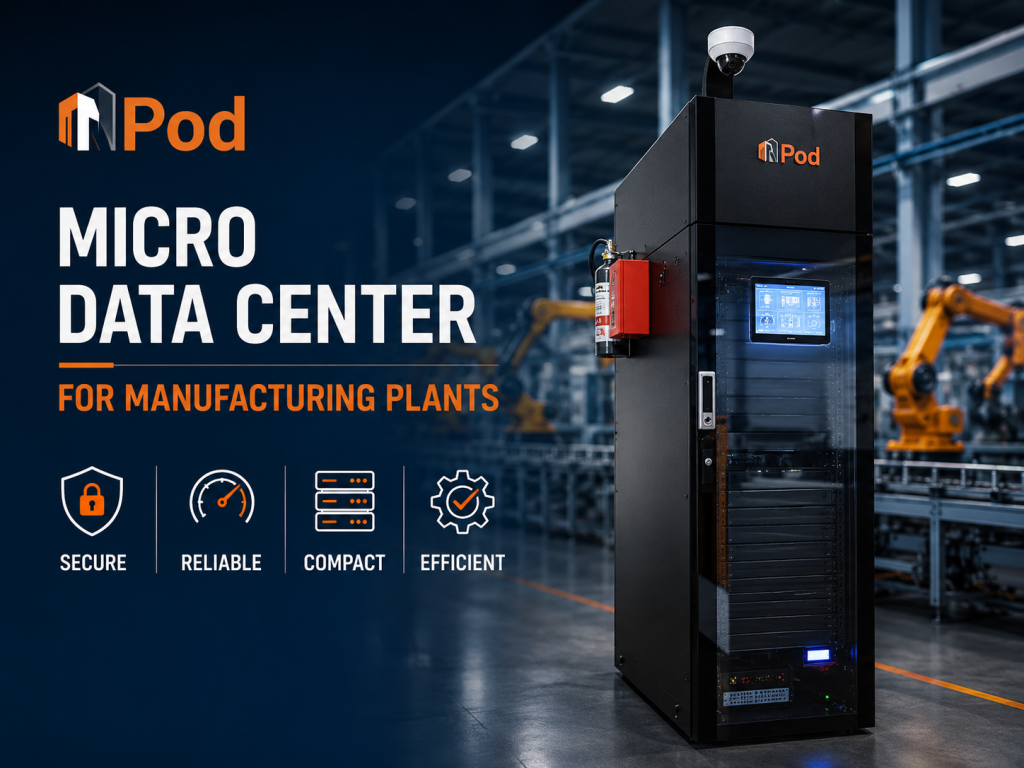
A micro data center is an autonomous unit of infrastructure in which computing, storage, networking, power distribution, cooling, and security all come in one box.
While a traditional data center relies on separate spaces for installation and heavy construction, a micro data center can be quickly assembled right at manufacturing facilities, warehousing premises, or even other remote places of operation.
Micro data center enable companies to have flexible and scalable micro data center solutions for their critical needs without significant investments in infrastructure.
Why Manufacturing Plants Need a Micro Data Center
With the increasing smartness of manufacturing facilities and the growth of data processing needs, there arises a question of why manufacturing plants need a micro data center.
1. Faster Data Processing at the Edge
Modern manufacturing processes rely on quick reaction time. Robotic sensors, devices, and automation systems can hardly withstand time lags associated with transferring data to remote servers.
Deployment of a micro data center near the production line allows for quicker data processing, which positively impacts system performance. It becomes crucial in case of:
- Automated production lines
- Quality control systems
- Applications for predictive maintenance
- Applications related to machine vision
- AI workloads in industrial sector
Fast data processing helps make instant decisions to ensure a continuous production process.
2. Building of Industry 4.0 Infrastructure
Industry 4.0 implies the development of an intelligent and connected manufacturing ecosystem. The Internet of Things, AI, and machine learning, as well as digital twins, are among numerous technologies requiring reliable computing capacity.
The efficient Industry 4.0 infrastructure relies on quick and effective data processing near operational systems. Micro data center offers:
- Advanced computing
- Reliable networking
- Effective power generation
- Environmental control systems
- Cooling and production services
- Enhanced Reliability and Reduced Downtime
Downtime in manufacturing can cost a company a lot of money. Even a short period of disruption can impact production and schedules.
Server rooms have several issues that revolve around cooling systems, power supply, and security. Specialized industrial data center solutions can be measured as
- Redundant power supply systems
- Cooling system
- Environmental monitoring
- Access control system
- Support for continuous operation
Since the critical application stays close to production equipment, an enterprise is able to operate despite any possible interruption in connections to remote facilities.
4. Implementing Edge Computing in Manufacturing
With the emergence of the industrial IoT, there has been a growing need to implement edge computing in manufacturing. The idea of edge computing suggests doing processing not in centralized facilities but near machines and equipment.
A micro data center for smart manufacturing is the base for this solution. Advantages of such a solution:
- Faster response time
- Less bandwidth usage
- Lesser dependence on WAN connectivity
- Better operational efficiency
- Better analytics and predictive maintenance
The more manufacturing factories are implementing AI and automation technologies, the greater their need for edge computing becomes.
Improving Manufacturing IT Infrastructure
Contemporary factories need reliable and secure manufacturing IT infrastructure to maintain their business.
Essential applications like MES, ERP systems, inventory solutions, and machine monitoring software eely on a stable IT infrastructure. The benefits that micro data centers provide include the following:
- Concentrating IT assets inside the facility
- Increasing system reliability
- Easier infrastructure management
- Protecting important workloads
- Remote monitoring possibilities
Modularity of the solutions also gives businesses the ability to scale infrastructure according to production needs without building expansive IT facilities.
Industrial Edge Computing Solutions for Modern Factories
Industrial edge computing solutions become popular among manufacturers since they give more control over the production data and increase visibility. Benefits that edge computing brings to businesses include:
- Prediction of Equipment Failure
Monitoring of machine condition and sending of data for analysis will enable predictive maintenance and prevent failures from happening. - Improvement of Quality Control Process
Vision machine systems need instant analysis for the detection of defects. Edge infrastructure allows this kind of work. - Optimization of Production Processes
Immediate insights allow manufacturers to make necessary adjustments instantly and avoid waste. - Work of Autonomous Systems
Robotic processes require high-speed communication and strong computational abilities.
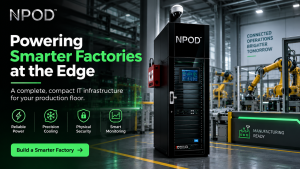
That is why many companies consider micro data centers for factories an integral part of their digital transformation.
Faster Deployment Compare to Traditional Infrastructure
Traditional server rooms usually require major capital outlays for cooling systems, power distribution, and facility adjustments. Micro data centers have several advantages:
- Small footprint
- Fast setup
- Cooling system
- Inbuilt security
- Low infrastructure complexity
- Easy scalability
The mentioned features make micro data centers an ideal solution for data center implementation at manufacturing plants requiring flexibility without extended building process duration.
Improvement in Secure and Business Continuity
There are cybersecurity risks as well as operational hazards in manufacturing plants. Protection of production systems and data storage become necessary. Modern micro data centers provide multiple levels of security:
- Physical security measures
- Environmental monitoring
- Integration with monitoring services
- Power backup solutions
- Remote management tools
Using micro data centers helps keep all critical workloads within the plant.
The Future of Smart Manufacturing Depends on Local Infrastructure
As automation, artificial intelligence, and IIoT continue evolving, the amount of data produced in factories will keep growing.
Companies that want to achieve higher efficiency and minimal latency are installing micro data center solutions for manufacturing facilities in order to ensure the success of their digital transformation efforts.
This kind of infrastructure becomes the foundation for smart factories because of its ability to enable the following:
- Real-time analytics
- Production systems driven by AI
- Predictive maintenance
- Quality control
- Operational resilience
Micro data centers can be used both in edge applications and in manufacturing IT infrastructure in order to offer flexible infrastructure for the new era of manufacturing.
Conclusion
The need to enhance productivity, minimize downtime, and use cutting-edge technology is always felt by manufacturers. The conventional method of using only centralized infrastructure might not always be enough in the age of interconnected factories.
A micro data center is a solution that provides local computing power, increased reliability, and flexible infrastructure that supports Industry 4.0 requirements. Whether it is supporting edge computing in manufacturing or industrial data center solutions, such facilities provide the means to create more robust production environments.
With the increasing digitalization of factories, proper infrastructure investments are vital for remaining competitive in the market. A micro data center for manufacturing plants is one such option.