India is witnessing one of the biggest digital infrastructure transformations in its history. The rapid growth of artificial intelligence, cloud computing, IoT devices, real-time analytics, smart manufacturing, and enterprise digital transformation is significantly increasing the demand for advanced digital infrastructure. As businesses move toward AI-driven operations and low-latency applications, the role of modern data center companies in India is becoming more important than ever.
Today, organizations require infrastructure that is scalable, secure, energy-efficient, and capable of supporting real-time workloads. Traditional centralized infrastructure models are no longer sufficient for industries that depend on uninterrupted digital services and high-speed data processing. This is where edge computing is changing the future of every major micro data center in India.
From healthcare and banking to manufacturing and AI startups, enterprises are now deploying infrastructure closer to users and devices to improve speed, reduce latency, strengthen security, and ensure operational continuity.
In this blog, we explore the growth of India’s digital infrastructure ecosystem, the rise of edge computing, and some of the top data center companies in India supporting the next generation of AI-ready infrastructure.
Why Edge Computing Is Driving Infrastructure Demand
Edge computing refers to processing and storing data closer to where it is generated instead of depending entirely on centralized cloud platforms. This infrastructure model helps businesses improve application performance and reduce delays caused by long-distance data transmission.
Modern enterprises are increasingly using edge computing because it helps:
- Reduce latency
- Improve application responsiveness
- Support real-time AI processing
- Enhance cybersecurity
- Reduce downtime risks
- Improve user experience
- Support remote business operations
Industries such as healthcare, telecom, banking, retail, manufacturing, and logistics are rapidly investing in edge infrastructure because many modern applications cannot tolerate delays.
For example:
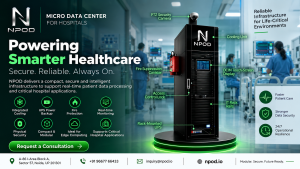
- Hospitals require real-time access to patient records and medical imaging
- Manufacturing plants use IoT sensors and AI analytics for automation
- Banks require uninterrupted transaction processing
- AI applications need low-latency GPU infrastructure
- Smart city systems require real-time monitoring and analytics
As a result, enterprises are increasingly searching for reliable data center companies in India that can support distributed infrastructure deployments and edge-ready environments.
Growth of the India Data Center Market
The Indian digital economy is growing rapidly due to increasing internet penetration, enterprise cloud adoption, AI transformation, and government-led digital initiatives.
The India data center market is being driven by several major factors:
- Artificial intelligence and machine learning adoption
- Expansion of cloud computing services
- 5G rollout across major cities
- Data localization requirements
- Enterprise cybersecurity concerns
- Rising demand for disaster recovery solutions
- Growth of OTT platforms and digital applications
Businesses now require modern infrastructure environments capable of handling:
- High-density workloads
- GPU-intensive applications
- Hybrid cloud deployments
- AI model training
- Real-time analytics
- Massive data storage requirements
This has led to strong investments in:
- Hyperscale facilities
- Colocation environments
- Modular data centers
- Edge infrastructure
- Secure backup ecosystems
- AI-ready deployments
As enterprises continue modernizing operations, the demand for scalable data center in India environments is increasing significantly across multiple regions.
How Many Data Center in India Are Supporting Enterprises?
One of the common questions businesses ask is: how many data center in India currently support enterprise operations and cloud ecosystems?
India now hosts a rapidly expanding network of:
- Enterprise data centers
- Hyperscale facilities
- Colocation environments
- AI-ready deployments
- Edge computing sites
- Regional infrastructure hubs
The number of operational facilities continues increasing as enterprises, cloud providers, telecom companies, and infrastructure providers invest aggressively in digital transformation.
Major infrastructure growth is happening across:
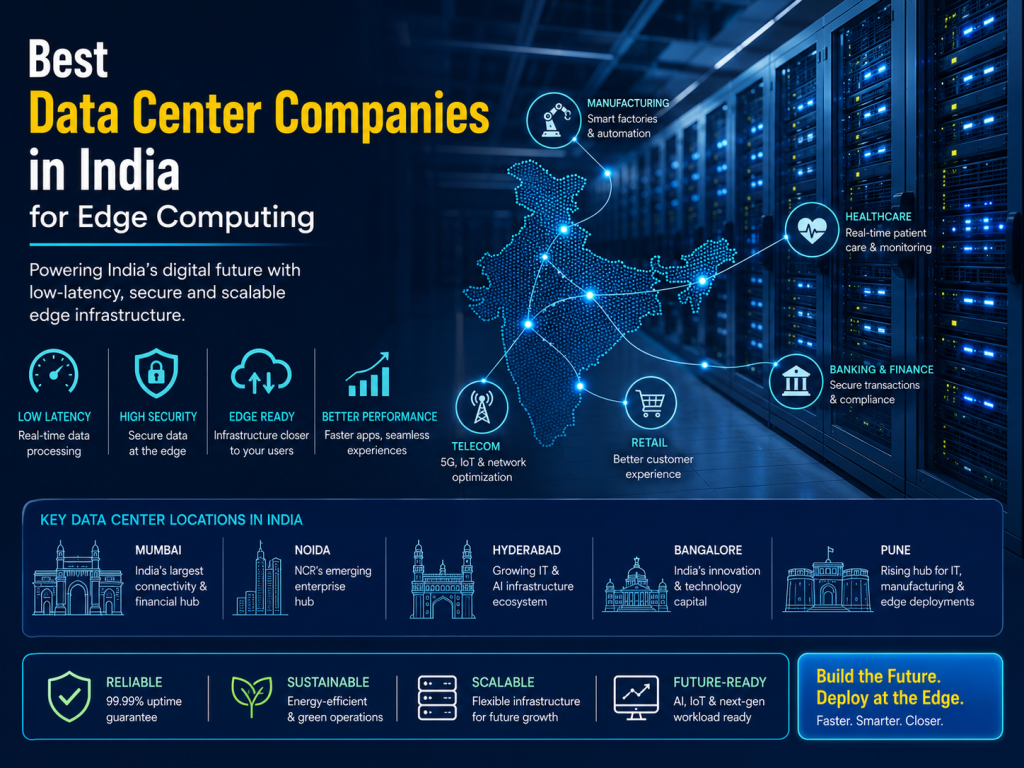
- Mumbai
- Noida
- Hyderabad
- Bangalore
- Pune
- Chennai
These cities have become important digital infrastructure hubs because of:
- Enterprise demand
- Connectivity ecosystems
- Cloud adoption
- Technology expansion
- Skilled workforce availability
The future of India’s digital ecosystem will heavily depend on expanding regional and edge-ready infrastructure deployments.
Best Data Center Companies in India for Edge Computing
Several companies are helping businesses modernize operations through scalable and AI-ready infrastructure ecosystems. Below are some of the leading top data center companies in India supporting edge computing and enterprise digital transformation.
1. NPOD – Micro Data Center
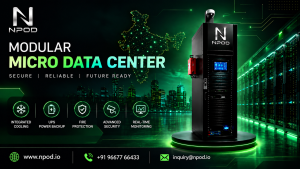
NPOD is emerging as one of the modern infrastructure providers focused on micro and modular edge-ready deployments. The company specializes in scalable infrastructure environments designed for organizations requiring low latency, high availability, rapid deployment, and secure digital operations.
Unlike traditional large-scale infrastructure facilities, NPOD focuses on modular deployments that can be installed closer to business operations. This makes it highly suitable for:
- Edge computing
- AI infrastructure
- Smart manufacturing
- Healthcare operations
- Banking environments
- Remote enterprise locations
NPOD’s infrastructure ecosystem includes:
- Precision cooling systems
- UPS backup power
- Fire protection systems
- Smart monitoring
- Secure edge architecture
- Scalable modular deployments
One of the biggest advantages of NPOD is faster deployment capability compared to conventional infrastructure setups. Enterprises can deploy infrastructure quickly without the long construction timelines associated with traditional facilities.
As businesses increasingly adopt distributed infrastructure environments, NPOD is becoming an important part of the evolving data center in India ecosystem.
2. NetForChoice Solutions
NetForChoice is another growing provider offering enterprise cloud, hosting, managed infrastructure, and disaster recovery solutions. The company focuses on helping organizations modernize operations through secure and scalable digital infrastructure environments.
Its services support:
- Enterprise cloud hosting
- Managed infrastructure
- Backup and disaster recovery
- Secure hosting ecosystems
- Business continuity solutions
- Cloud transformation initiatives
NetForChoice continues expanding its infrastructure capabilities to support enterprises requiring high-performance digital environments and reliable infrastructure ecosystems.
As organizations prioritize cybersecurity, uptime, and scalability, NetForChoice is positioning itself among the emerging top data center companies in India supporting enterprise digital transformation.
3. STT GDC India
STT GDC India operates large-scale enterprise facilities across multiple Indian cities. The company focuses heavily on scalability, enterprise connectivity, cloud ecosystems, and high-performance hosting environments.
Its infrastructure supports:
- Cloud service providers
- Enterprise applications
- AI workloads
- High-density computing
- Business-critical environments
Its expanding presence across major regions continues supporting India’s rapidly growing digital infrastructure demand.
4. CtrlS Datacenters
CtrlS is known for its high-availability infrastructure and enterprise-grade disaster recovery capabilities. The company has built a strong reputation for secure and resilient infrastructure environments.
CtrlS infrastructure supports:
- BFSI operations
- Enterprise hosting
- Secure application environments
- Disaster recovery systems
- Mission-critical workloads
The company’s expansion across multiple cities is helping businesses improve operational continuity and infrastructure reliability.
5. Nxtra by Airtel
Nxtra has emerged as a major infrastructure provider focused on distributed digital ecosystems and edge computing deployments. The company is building infrastructure environments capable of supporting low-latency enterprise applications and cloud services.
Nxtra’s infrastructure strategy aligns closely with:
- Enterprise cloud growth
- AI transformation
- Edge infrastructure demand
- Distributed digital operations
Its expanding regional ecosystem is helping businesses improve performance and reduce latency.
6. AdaniConneX
AdaniConneX is investing aggressively in hyperscale infrastructure and sustainable digital ecosystems across India. The company aims to support future AI, cloud computing, and enterprise infrastructure demand through modern large-scale deployments.
Its infrastructure expansion plans focus heavily on:
- Sustainability
- High-capacity infrastructure
- AI-ready environments
- Enterprise cloud support
The company’s long-term infrastructure investments align strongly with the future growth of the India data center market.
7. Yotta Infrastructure
Yotta operates modern high-density infrastructure environments designed for enterprise workloads, cloud computing, and AI applications.
The company focuses on:
- GPU infrastructure
- High-density computing
- AI-ready ecosystems
- Enterprise scalability
- Cloud hosting environments
As AI workloads continue increasing, companies like Yotta are becoming increasingly important in supporting India’s next-generation digital infrastructure ecosystem.
Data Center in Mumbai: India’s Largest Infrastructure Hub
The demand for data center in Mumbai environments continues increasing rapidly because Mumbai remains India’s largest connectivity and enterprise infrastructure hub.
Mumbai is preferred because of:
- Strong submarine cable connectivity
- Large financial sector presence
- Enterprise cloud ecosystem
- Better network infrastructure
- High business demand
The city continues attracting large investments from hyperscale providers, enterprise infrastructure companies, and cloud operators.
Data Center in Noida: Rapid Enterprise Growth
The demand for data center in Noida infrastructure is growing rapidly as businesses across North India modernize operations.
Noida offers:
- Strong enterprise connectivity
- Growing IT ecosystem
- Proximity to Delhi NCR
- Expanding startup environment
Many enterprises are now deploying infrastructure in Noida to improve application performance and support regional business operations.
Data Centers in Hyderabad: Growing AI Infrastructure
The rise of data centers in Hyderabad is being driven by rapid IT growth, AI investments, enterprise cloud adoption, and government support for digital infrastructure expansion.
Hyderabad has become an important infrastructure hub because of
- Technology ecosystem growth
- Skilled workforce availability
- Enterprise expansion
- AI adoption
Several infrastructure providers are strengthening operations in the city to support future-ready digital environments.
Data Centers in Bangalore: Supporting Innovation and Startups
The demand for data centers in Bangalore continues increasing because Bangalore remains India’s leading startup and technology ecosystem.
The city supports:
- SaaS businesses
- AI startups
- Cloud-native enterprises
- Research and development operations
This is increasing demand for scalable infrastructure and edge-ready deployments across the region.
Data Center in Pune: Emerging Infrastructure Market
The demand for data center in Pune infrastructure is also increasing steadily due to the city’s expanding IT and manufacturing ecosystem.
Pune is becoming an important destination for:
- Regional edge deployments
- Enterprise cloud operations
- Manufacturing infrastructure
- Low-latency applications
As enterprise digital transformation accelerates, Pune’s role in India’s infrastructure ecosystem is expected to grow further.
Challenges Facing the Industry
Despite strong growth opportunities, infrastructure providers also face several challenges:
- Rising energy consumption
- Cooling efficiency requirements
- Power availability concerns
- Land acquisition costs
- Sustainability expectations
- Increasing operational expenses
Companies investing in energy-efficient and scalable infrastructure models may gain long-term advantages as the industry evolves.
Future of Edge Computing in India
India’s digital infrastructure ecosystem is expected to grow significantly over the next decade. The rise of AI, IoT devices, automation, and real-time digital services will continue increasing demand for distributed infrastructure environments.
Future infrastructure demand will focus heavily on:
- AI-ready environments
- Edge computing
- GPU infrastructure
- Sustainable facilities
- High-density computing
- Low-latency deployments
As enterprises continue modernizing operations, the role of advanced data center companies in India will become even more important.
Conclusion
India is entering a new era of digital transformation powered by AI, cloud computing, and edge infrastructure. Businesses now require scalable, secure, and low-latency infrastructure environments capable of supporting real-time digital operations.
From data center in Mumbai facilities to expanding infrastructure ecosystems in Noida, Hyderabad, Bangalore, and Pune, India’s digital infrastructure landscape is evolving rapidly.
Organizations planning future-ready operations should focus on infrastructure providers capable of supporting AI workloads, enterprise scalability, cybersecurity, and edge computing environments efficiently.
The future of India’s digital economy will depend heavily on advanced infrastructure ecosystems capable of supporting next-generation applications and enterprise transformation.
FAQs
1. Why are data center companies in India growing rapidly?
The growth is driven by AI adoption, cloud computing, edge infrastructure demand, enterprise digital transformation, and rising cybersecurity requirements.
2. Why is edge computing important for businesses?
Edge computing improves application performance, reduces latency, enhances cybersecurity, and supports real-time digital operations.
3. Why is Mumbai considered a major infrastructure hub?
Mumbai offers strong connectivity, submarine cable access, financial sector presence, and high enterprise demand.
4. Why are data centers in Hyderabad expanding rapidly?
Hyderabad is growing because of increasing IT investments, AI adoption, enterprise cloud demand, and government support.
5. Which industries benefit most from edge computing?
Healthcare, banking, manufacturing, telecom, retail, logistics, and AI-driven businesses benefit significantly from edge infrastructure.