Healthcare organizations are rapidly moving toward digital operations. From electronic health records and medical imaging to telemedicine and connected medical devices, hospitals now depend heavily on secure IT infrastructure. However, with growing digital transformation comes a major challenge – protecting sensitive patient information from cyber threats, downtime, and infrastructure failures.
Today, hospitals are among the top targets for ransomware attacks and data breaches. A single security incident can disrupt healthcare services, compromise confidential records, and damage patient trust. Traditional server rooms are often unable to meet the rising demands of modern healthcare environments.
This is why many healthcare providers are now adopting micro data center solutions to strengthen security, improve operational reliability, and modernize healthcare IT infrastructure.
In this article, we will explore how hospitals can protect patient data using secure and scalable micro data center technologies while improving performance, compliance readiness, and overall infrastructure efficiency.
The Growing Importance of Patient Data Security
Modern hospitals handle large volumes of highly confidential information every day, including:
- Electronic medical records
- Diagnostic reports
- Insurance details
- Billing information
- Patient monitoring data
- Medical imaging files
Because this data is extremely sensitive, healthcare institutions face increasing pressure to strengthen data protection and cyber security practices.
A weak or outdated IT environment can expose hospitals to serious risks such as the following:
- Unauthorized data access
- Ransomware attacks
- System outages
- Compliance violations
- Loss of patient confidence
For healthcare providers, maintaining secure and uninterrupted access to patient information is now essential for both operational continuity and quality patient care.
Major Challenges in Healthcare IT Infrastructure
Increasing Cyber Security Threats
Cyberattacks on hospitals are rising every year. Hackers often target healthcare organizations because medical records contain valuable personal and financial information.
Without proper cyber security systems, hospitals may experience the following:
- Data theft
- Encrypted systems due to ransomware
- Financial losses
- Disrupted healthcare operations
This makes secure infrastructure a top priority for healthcare organizations.
Outdated Hospital Server Rooms
Many healthcare facilities still operate traditional hospital server room setups that were not designed for modern workloads.
Common issues include:
- Poor cooling systems
- Limited physical security
- Inadequate power backup
- Lack of remote monitoring
- Space constraints
These limitations increase the chances of equipment failure and operational downtime.
Downtime and Infrastructure Failures
Hospitals require 24/7 access to critical applications and systems. Downtime can directly affect:
- Emergency services
- Patient monitoring
- Laboratory systems
- Pharmacy operations
- Healthcare communication platforms
Even short disruptions can create serious operational and patient care challenges.
Compliance and Data Protection Concerns
Healthcare organizations must follow strict regulations related to patient privacy and healthcare data management. Poor infrastructure security can increase the risk of compliance issues and legal penalties.
What Is a Micro Data Center?
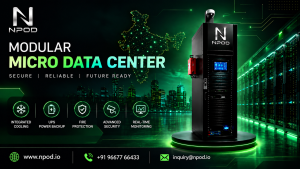
A micro data center is a compact, secure, and self-contained IT infrastructure solution built to support critical computing environments.
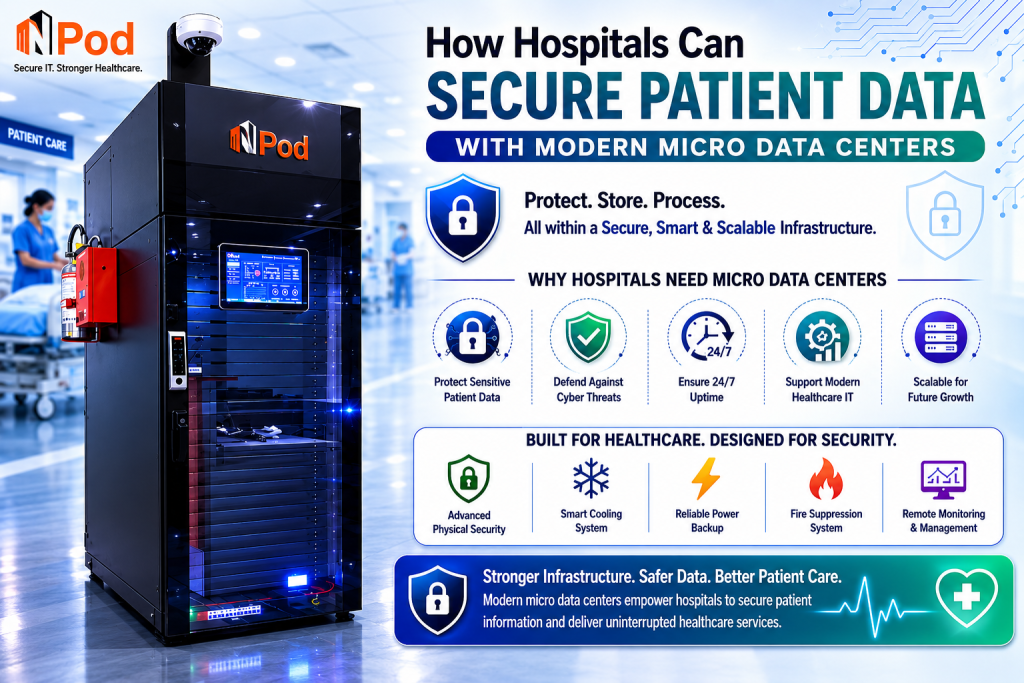
Unlike conventional server rooms, a micro data center combines essential infrastructure components into a single integrated system, including:
- Intelligent cooling
- UPS power backup
- Fire suppression systems
- Physical access security
- Environmental monitoring
- Remote management capabilities
These systems are designed to provide secure and reliable operations in healthcare environments where uptime and data protection are critical.
Modern modular data center solutions are highly suitable for hospitals, clinics, diagnostic centers, and healthcare campuses that require scalable and secure infrastructure.
How Micro Data Centers Help Protect Patient Data
Strong Physical Security
One of the key advantages of a micro data center is enhanced physical security.
Modern systems support:
- Biometric authentication
- Smart access control
- Security alerts
- Surveillance integration
- Controlled server access
This helps hospitals prevent unauthorized access to sensitive healthcare systems and patient records.
Advanced Data Security
Protecting digital healthcare information requires more than just antivirus software.
A secure micro data center environment helps strengthen data security through:
- Encrypted data storage
- Secure network architecture
- Localized data processing
- Intelligent monitoring
- Faster threat response
Hospitals can also maintain better control over sensitive data by using secure on-premise healthcare IT infrastructure.
Reliable Cooling and Power Protection
Heat and power instability are major causes of server failure in healthcare facilities.
Micro data centers include integrated systems such as
- Precision cooling
- UPS backup
- Environmental sensors
- Power redundancy
These features help maintain continuous uptime for critical hospital IT systems.
Improved Disaster Recovery and Business Continuity
Healthcare organizations cannot afford extended downtime during emergencies or cyber incidents.
A modular micro data center improves business continuity by supporting:
- Faster recovery processes
- Local backup integration
- High-availability infrastructure
- Reduced operational interruptions
This allows healthcare providers to continue delivering essential services without disruption.
Edge Computing Benefits in Healthcare
The healthcare industry increasingly relies on real-time data processing. This is where edge computing plays an important role.
Edge computing allows hospitals to process data closer to medical devices and healthcare applications instead of relying completely on distant centralized systems.
Benefits include:
- Faster data processing
- Lower latency
- Improved medical device performance
- Better telemedicine support
- Enhanced patient monitoring
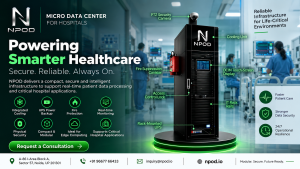
For example, patient monitoring systems in intensive care units can process information locally through a micro data center, enabling faster response times and improved reliability.
This creates a more efficient and intelligent smart hospital infrastructure.
Business Advantages of Micro Data Center for Hospitals
Space-Efficient Design
A micro data center requires far less space compared to traditional server room environments.
Scalable Infrastructure
Hospitals can easily expand infrastructure as operational needs grow.
Lower Operational Costs
Integrated systems help reduce maintenance complexity and energy consumption.
Rapid Deployment
Healthcare facilities can deploy modular solutions quickly without major infrastructure changes.
Simplified Infrastructure Management
Remote monitoring capabilities allow healthcare IT teams to efficiently manage systems across multiple locations.
Why On-Premise Secure Healthcare Infrastructure Matters
As healthcare organizations become more concerned about data privacy and operational control, secure on-premise infrastructure is gaining importance.
A modern micro data center helps healthcare providers maintain the following:
- Better control over sensitive data
- Faster access to critical applications
- Improved security visibility
- Reduced dependency on external environments
- Stronger infrastructure reliability
This approach is especially beneficial for hospitals managing mission-critical healthcare technology solutions.
As experts in secure healthcare infrastructure and modular data center deployment, we understand the operational and security challenges healthcare providers face. Modern micro data center solutions are helping hospitals improve patient data security while supporting long-term digital transformation goals.
Real-World Use Case
A healthcare organization operating multiple departments faced ongoing issues with overheating servers, power interruptions, and limited physical security within its existing hospital server room.
The organization also wanted to improve cyber security readiness and reduce downtime risks affecting patient management systems.
To address these challenges, a modular micro data center solution was implemented with the following:
- Integrated cooling systems
- UPS backup
- Fire protection
- Smart monitoring
- Secure access control
After deployment, the hospital experienced:
- Improved infrastructure reliability
- Enhanced patient data security
- Reduced downtime
- Better infrastructure monitoring
- Stronger operational efficiency
The healthcare facility also gained the flexibility to support future digital healthcare initiatives more effectively.
Conclusion
Protecting patient information requires more than traditional IT infrastructure. Hospitals now need secure, scalable, and intelligent environments capable of handling modern healthcare workloads and growing cyber security challenges.
A modern micro data center helps healthcare organizations improve data protection, operational continuity, and infrastructure efficiency while supporting edge computing and digital healthcare transformation.
From improving cyber security to reducing downtime and modernizing healthcare IT infrastructure, micro data centers are becoming a critical part of secure healthcare operations.
If your healthcare organization is planning to upgrade its secure IT infrastructure, our experts can help you deploy reliable and scalable micro data center solutions designed specifically for healthcare environments.
FAQs
1. What is a micro data center in healthcare?
A micro data center is a compact and integrated IT infrastructure solution that provides secure computing, cooling, power backup, monitoring, and physical protection for healthcare environments.
2. How does a micro data center improve patient data security?
It improves patient data security by offering secure access control, localized data processing, intelligent monitoring, and reliable infrastructure protection.
3. Why is edge computing important in hospitals?
Edge computing enables faster processing of healthcare data closer to medical devices and applications, improving speed, reliability, and patient care performance.
4. Can a modular data center reduce hospital downtime?
Yes. Modular data center solutions include backup power, cooling, and monitoring systems that help minimize infrastructure failures and operational disruptions.
5. Are micro data centers suitable for small healthcare facilities?
Yes. Micro data centers are scalable and space-efficient, making them suitable for hospitals, clinics, diagnostic labs, and other healthcare facilities of all sizes.
6. What is the NVIDIA A100 GPU used for?
The NVIDIA A100 GPU is designed for AI training, machine learning, deep learning, data analytics, and high-performance computing workloads. It helps businesses accelerate AI applications, improve processing speed, and handle large-scale enterprise computing tasks efficiently.
Protect Patient Data with Secure Micro Data Centers
Talk to our experts for scalable, secure, and reliable healthcare IT infrastructure solutions.