Edge computing is changing how businesses process data, improve speed, and deliver modern digital experiences. If you searched the phrase “edge computing is often referred to as a topology,” you are likely trying to understand why experts use this term.
The answer is simple: It is not only about technology. It is also about how computing resources are arranged across a network. The location of servers, devices, gateways, and processing nodes directly impacts performance, speed, and reliability.
In this guide, you will learn what is edge computing, why topology matters, how it compares with cloud systems, and real-world use cases.
What Is Edge Computing?
Many people ask, “What is edge computing?” when learning about modern IT systems.
It is a distributed computing model where data is processed near the source where it is created, instead of sending everything to a distant cloud server first.
The “edge” can include the following:
- Smart devices
- IoT sensors
- Security cameras
- Factory equipment
- Retail systems
- Local servers
- Telecom towers
For example, a smart camera in a store can detect movement locally and send only alerts to the cloud instead of uploading constant video footage.
This reduces delays and improves efficiency.
Why Edge Computing Is Often Referred to as a Topology
To understand this phrase, you first need to understand topology.
In networking, topology means the physical or logical arrangement of devices, systems, and connections. It explains how resources are connected and where they are located.
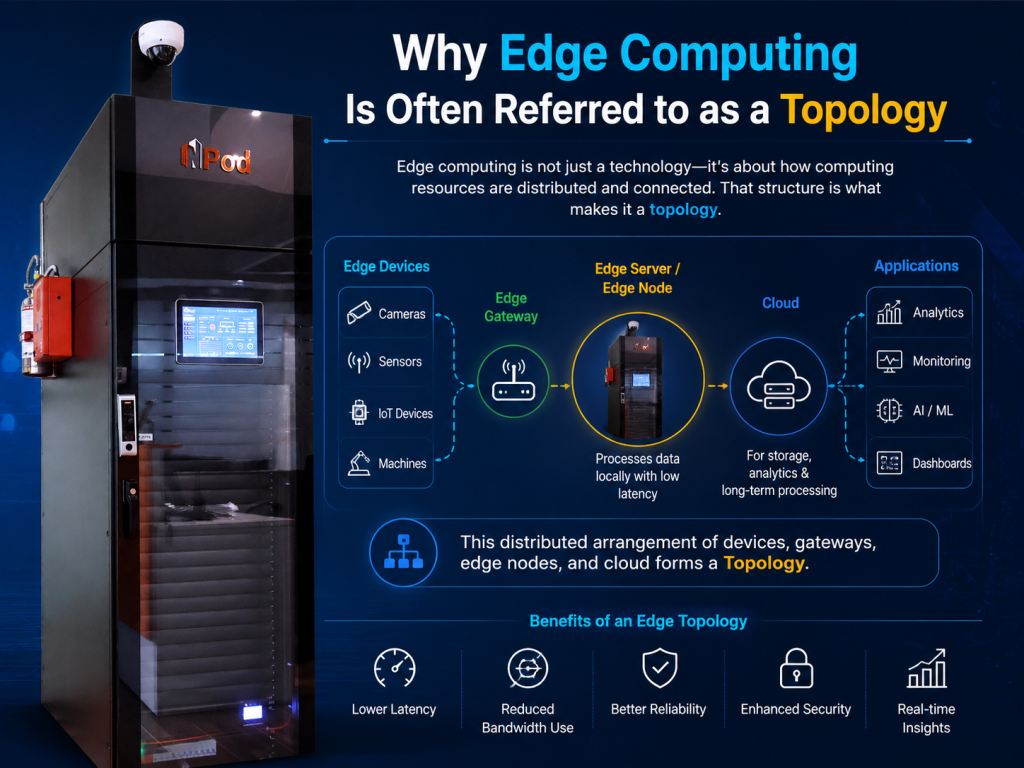
That is why edge computing is often referred to as a topology. The success of edge systems depends on where computing power is placed across multiple locations.
Instead of relying only on one centralized cloud platform, organizations distribute computing resources closer to users, devices, and operations.
This decentralized design helps with:
- Faster processing
- Lower latency
- Better reliability
- Real-time analytics
- Improved customer experiences
- Reduced bandwidth costs
Edge Computing Architecture Explained
A modern edge computing architecture usually combines local processing with centralized cloud support.
Core components include:
1. Edge Devices
These devices generate data:
- Sensors
- Cameras
- Mobile devices
- Smart machines
2. Edge Gateways
Gateways collect and route data from multiple devices.
3. Local Edge Servers
These servers process workloads close to the source.
4. Cloud Platforms
Used for:
- Long-term storage
- Backup systems
- AI model training
- Large-scale analytics
5. Connectivity Layer
Common network types include:
- Wi-Fi
- Ethernet
- Fiber
- LTE
- 5G
This structure explains what describes the relationship between edge computing and cloud computing: they often work together instead of replacing each other.
Cloud Computing vs Edge Computing
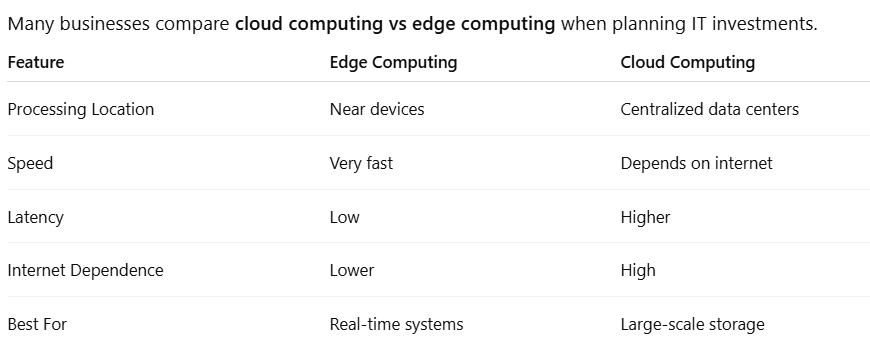
For many companies, the best strategy is using both systems together.
What Describes the Relationship Between Edge Computing and Cloud Computing?
Many readers ask what describes the relationship between edge computing and cloud computing most accurately.
The best answer is
- Edge handles local, time-sensitive tasks
- Cloud handles storage and advanced analytics
- Both systems exchange useful data
For example:
- A factory sensor detects issues instantly at the edge
- Summary data is sent to the cloud
- Cloud AI improves future predictions
- Updated models are returned to edge devices
This creates a smarter hybrid environment.
Benefits of Computing at the Edge
Organizations choose computing at the edge because it offers clear advantages.
Lower Latency
Nearby processing reduces delays.
Reduced Bandwidth Costs
Only important data travels to the cloud.
Better Reliability
Systems can continue operating during internet disruptions.
Stronger Privacy Controls
Sensitive data may remain local.
Better User Experience
Faster applications improve customer satisfaction.
These benefits are a key reason edge computing is often referred to as a topology rather than only a computing method.
Edge Computing Examples in Real Life
There are many practical edge computing examples already in use today.
Smart Retail
Stores use local analytics for checkout systems, shelf monitoring, and customer insights.
Manufacturing
Machines detect faults instantly and reduce downtime.
Healthcare
Patient monitoring systems trigger real-time alerts.
Logistics
Delivery vehicles optimize routes while moving.
Smart Cities
Traffic lights and public systems react dynamically.
These edge computing examples show why system placement is so important.
Multi-Access Edge Computing (MEC)
Another growing trend is multi-access edge computing.
This model places edge resources inside telecom or mobile network infrastructure. It is often combined with 5G networks.
Benefits include:
- Ultra-low latency apps
- Better video streaming
- Faster mobile gaming
- AR and VR support
- Smarter connected vehicles
As 5G expands globally, multi-access computing is expected to grow rapidly.
Deploy a micro data center to bring computing closer to your business operations. Get real-time processing, reduced latency, and enhanced security without complex infrastructure. Perfect for edge computing, remote locations, and fast deployment needs.
Challenges of Edge Computing
Although it offers many benefits, it also requires planning.
Initial Deployment Costs
Hardware across multiple sites may require upfront investment.
Device Management
Large networks need monitoring and updates.
Security Complexity
More connected endpoints create more security responsibilities.
Integration Issues
Older systems may need modernization.
Future of Edge Computing
The future of computing looks strong as connected devices continue to grow.
Key Trends Include:
- AI at the edge
- 5G expansion
- Smart automation
- Real-time analytics
- Sustainable IT systems
This is another reason it is often referred to as a topology – because distributed design will shape future infrastructure.
Power high-performance workloads with advanced GPU server computing solutions designed for AI, machine learning, and data-intensive applications. Modern GPU infrastructure ensures faster processing, parallel computing, and scalable performance for growing business needs.
Frequently Asked Questions
Is edge computing better than cloud computing?
Not always. Edge is better for real-time tasks, while the cloud is better for storage and scale.
Can edge and cloud work together?
Yes. Many organizations use hybrid systems.
Why is topology important?
Topology affects speed, scalability, reliability, and security.
Is edge computing expensive?
Initial setup can cost more, but long-term efficiency may reduce expenses.
Conclusion
It is more than a technology trend. It is a smarter way to process data closer to users, devices, and operations.
That is why it is often referred to as a topology. It focuses on where computing resources are placed and how they connect across different environments.
Businesses that understand this model can reduce delays, improve performance, and build future-ready digital systems.